
// Case study
Spahr Metric Metal
Same catalog. A site that can handle it, and a quote path buyers want to follow.
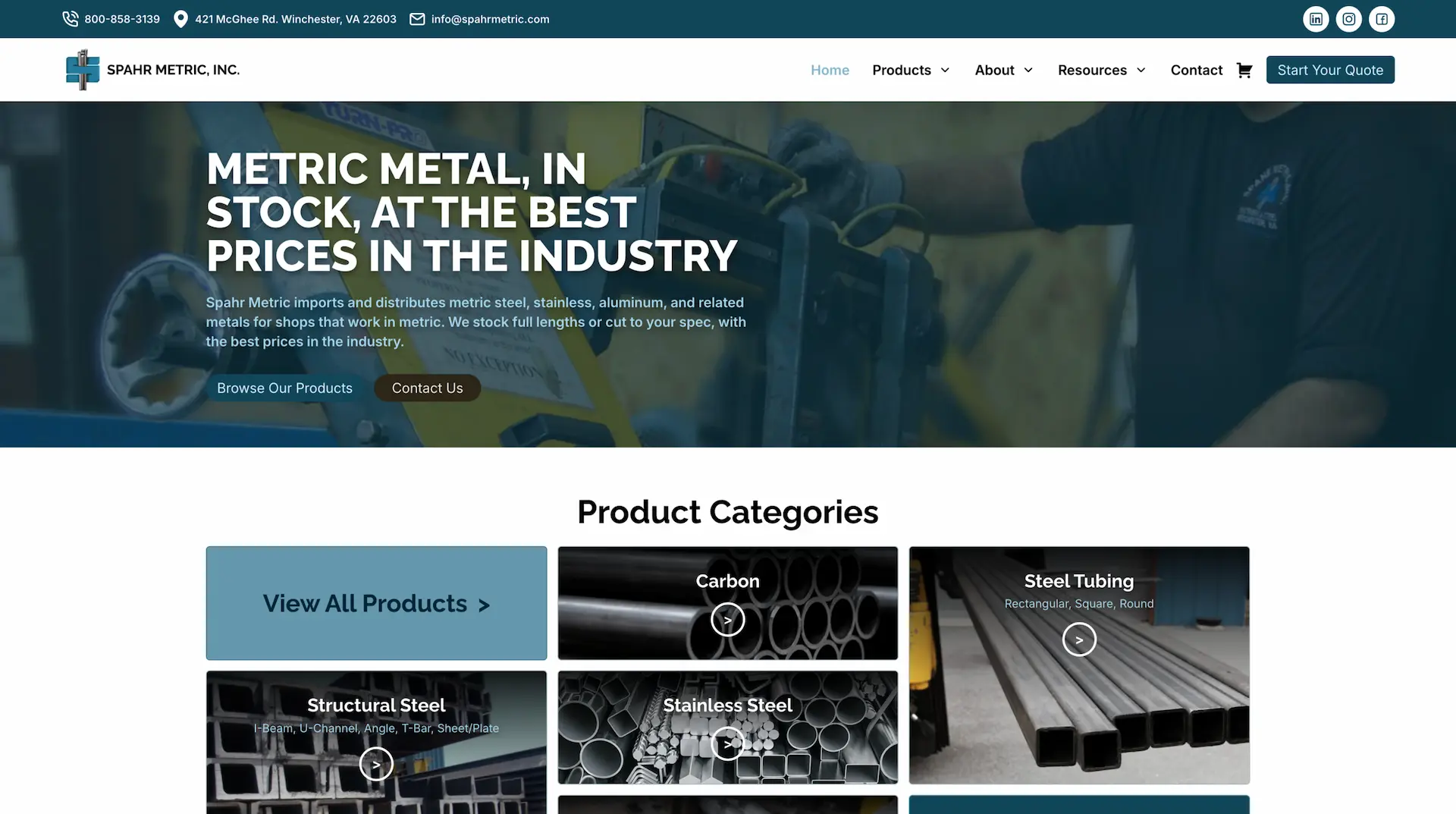
- Client
- Spahr Metric Metal
- Owner
- Chantal Aeschbach-Powell
- Industry
- Metric Metal Importing
- Location
- Winchester, VA
- Timeline
- About 1 month from planning to new site launch
- Work
- Custom web and SEO, social, video, drone, design and photo
- Site
- spahrmetric.com
// The company
The catalog is how a new customer gets a price.
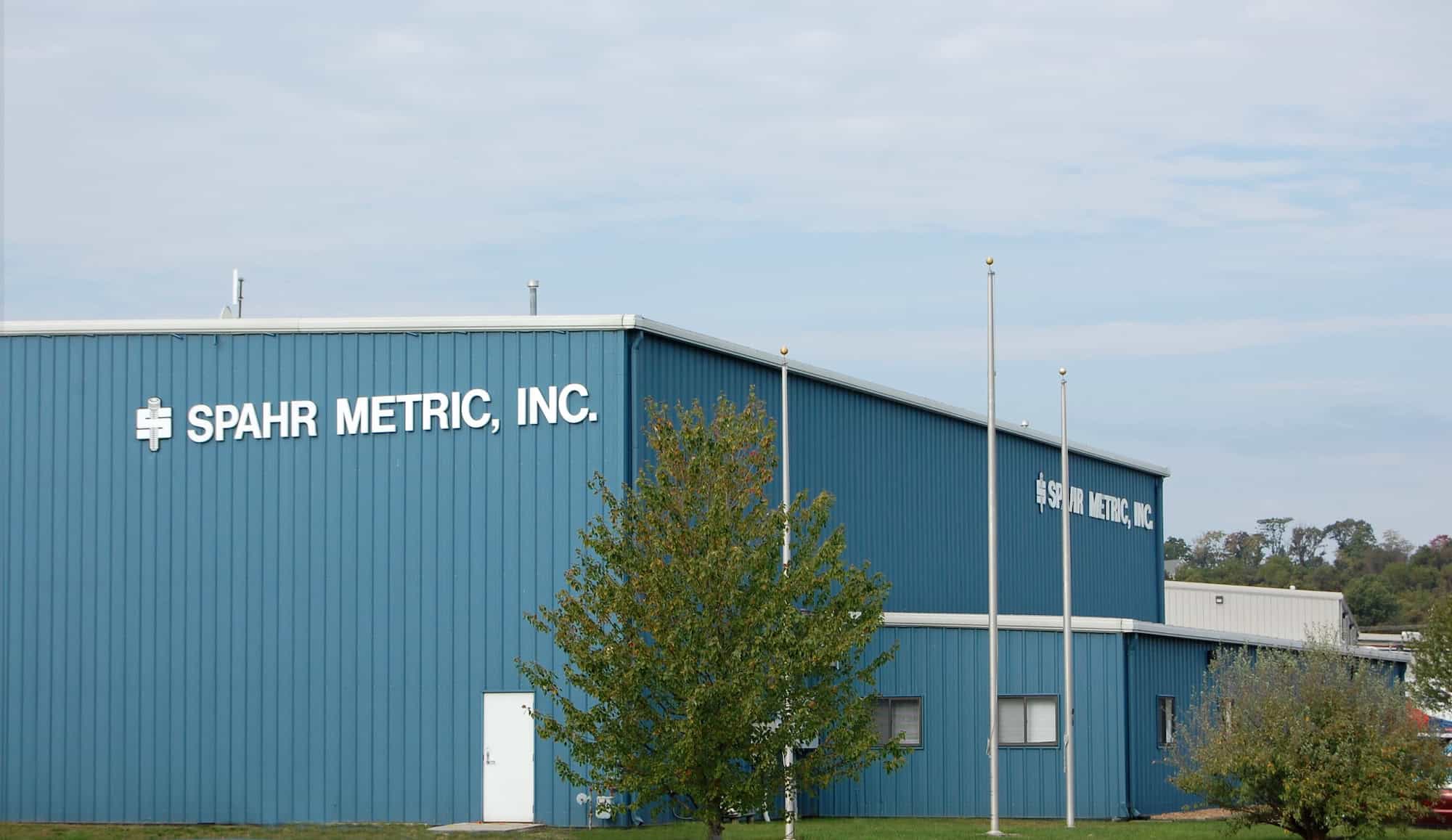
Spahr Metric imports and distributes metric metals of all kinds out of Winchester, Virginia. Shops that build in metric sizes need importers like Spahr Metric to get the custom materials they need. Roughly 25 years of doing that. The website is a catalog that feeds a quote for all new customers. The sales team prices it and sends it back.
// Before
A single product could have thousands of variations.
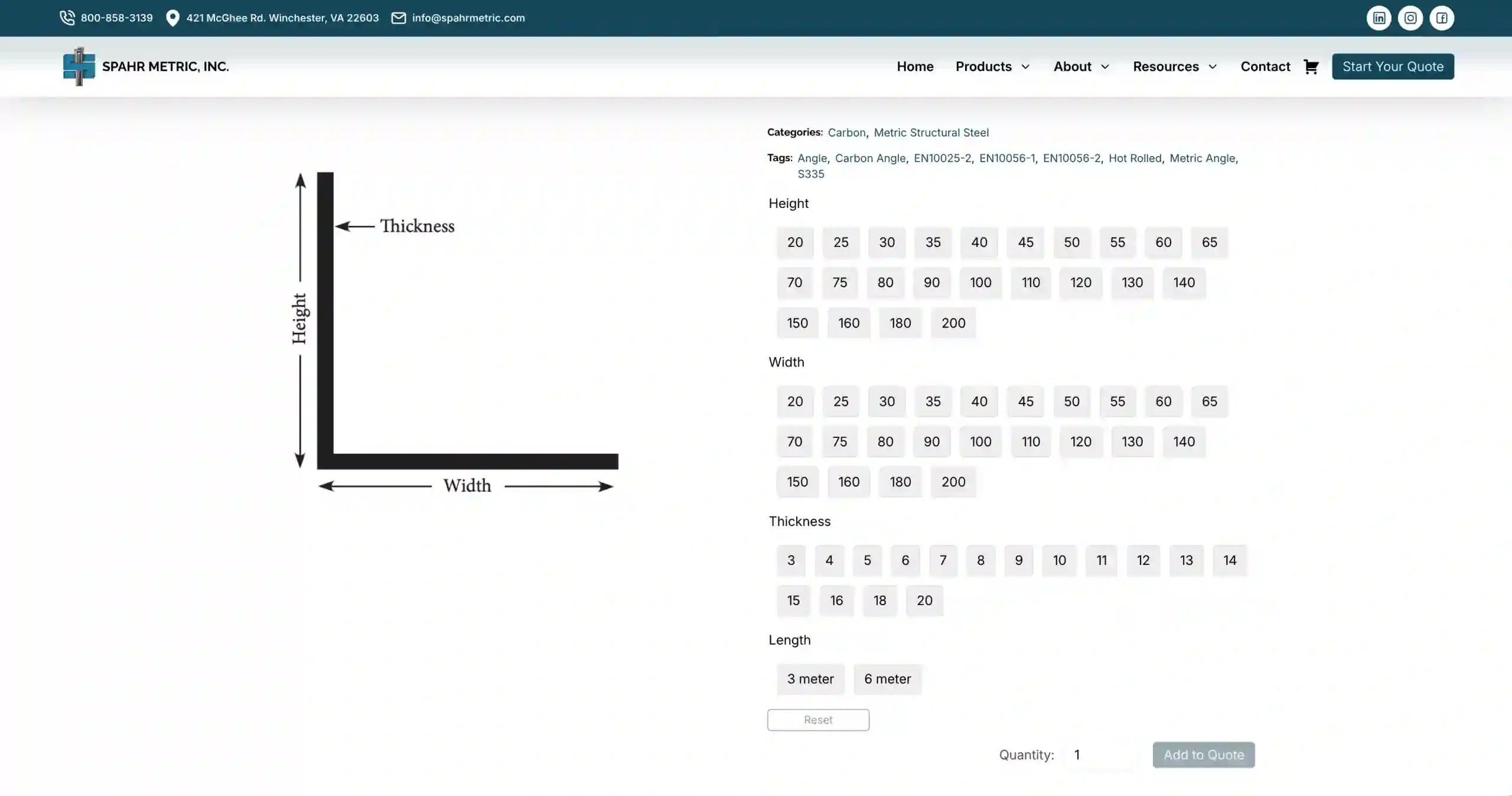
A hundred-plus products. Dimensions on almost all of them. A rectangular tube with 10 heights, 10 widths, 10 wall thicknesses, and 2 lengths is 2,000 combinations before you touch the next item. Across the catalog that ran into the tens of thousands of variations.
The old site stored all of it. The database got heavy enough that pages broke and the site timed out. A buyer who already knew the size still could not count on getting a quote through.
// What we did
Fix the data. Then make the quote obvious.
Catalog
I rebuilt the data architecture with a custom system and got rid of the database bloat by converting the variations into lightweight JSON that was queryable on the frontend. Buyers still pick height, width, wall, length instantly. Those combinations are no longer sitting in the database as tens of thousands of variations. Each product's variations live which their respective product, making the database query only 1 product at a time, not 10,000+. The timeouts were a storage and query problem. This solution removed it.
Quote path
This site mainly serves new customers, so the small redesign pointed at just that. State the process and the catalog clearly, describe the business straight, and put the real sequence in the open: choose the metal, add it to a quote, send the request, sales replies (often the next business day). That is the part that improved conversion.
Search
The previous site already ranked and already had domain authority. We ran an SEO audit for Google and for AI search, then expanded on what was working so more of the right buyers could find the catalog to increase Spahr's revenue.
// After
The same catalog stays up.
A buyer can see what Spahr sells and exactly how a quote moves, and more of those visits become requests.
Search kept the head start and reached further.
// Next step
Catalog too heavy for the site?
If the company is solid and the site is buckling under its own products, we should talk.